The Portland metro is now a healthier buyer's market as of 2026: roughly four months of supply, about 40% of listings seeing price reductions, and median home prices down from the 2021 peak of $580K–$625K to around $525K–$550K. Cost of living is still running about 7% above the national average, but no sales tax and moderating rates (around 6%) offset a lot of that. Choosing the right neighborhood, not the market timing, is still the biggest lever on how the move actually works out.
Things have shifted in the Portland metro market heading into 2026 — the housing market, the cost of living, and daily life. Here's what's actually changed and what it means if you're planning a move.
The housing market is healthier for buyers
We're approaching four months of supply across the Portland metro, including Southwest Washington. That means room to negotiate — repairs requested and actually fixed, concessions paid, closing costs covered depending on loan type. Roughly 40% of homes on the market are seeing price reductions from their original list price, which tells you there's real room to find a deal right now.
Five years ago, at the peak of the pandemic-era frenzy, median home prices ran $580K–$625K. Now they're closer to $525K–$550K. We're still in a somewhat elevated interest rate environment, but rates are starting to come down, and even a modest rate buy-down can save real money monthly. I recently helped a client relocating from California secure over $16,000 in seller credit, split between closing costs, paying down debt, and buying down their rate.
Cost of living: still a West Coast city
Utilities, groceries, gas — costs are running about 7% above the national average as the region shifts toward more green-energy infrastructure. The trade-off is still no sales tax, which is a real 7–10% savings on big purchases compared to neighboring states. Income tax remains a real budget line, and property taxes vary meaningfully by county — Multnomah County runs notably higher than Washington or Clackamas County, so which county you buy in is worth factoring into your budget alongside the home price itself. On the rental side, one-bedroom apartments have come down from a pandemic-era peak of around $1,800/month to $1,500–$1,600/month now.
The job market is rebounding
The west-side tech corridor — Intel, Nike, and the surrounding semiconductor manufacturing ecosystem — is picking back up as the broader economy improves and rates ease. That demand is driving new construction and elevated home prices on that side of the metro. One trend worth knowing: healthcare technology is actually the fastest-growing sector in the metro right now, driven largely by OHSU's expansion. And more than half of professional workers here are now remote or hybrid, which is shifting what buyers want in a home — real office space is a growing priority.
Where the new development is happening
The Broadway Corridor — the redevelopment of the old USPS site downtown — is the biggest project of 2026: a multi-hundred-acre transformation with new bike infrastructure tied into the Green Loop system, projected to create over 4,000 jobs and new mixed-income housing. There's also the Build a Better 82nd initiative, aimed at improving infrastructure and safety along a corridor that saw real challenges post-pandemic. And on the west side, Beaverton's downtown is getting investment aimed at giving it more of a walkable, "downtown Portland" feel closer to home for west-side residents.
Getting around
The city continues investing in bike infrastructure and public transit (TriMet, plus a rapid bus system on the inner east side), but this still isn't a car-free city by any means. The bridge bottlenecks — especially the I-5 crossing to Vancouver, WA — remain the biggest daily friction point, with slow periods stretching well outside traditional rush hour. Where you live relative to where you work still matters more than almost anything else for your day-to-day quality of life.
The bottom line
2026 is shaping up as one of the better windows to buy in Portland in the last several years — more inventory, more negotiating power, and rates trending the right direction. But the market data only gets you so far. Choosing the right neighborhood for your specific situation is what actually determines whether the move works out.
Frequently asked questions
Is the Portland housing market a buyer's market in 2026?
Yes, broadly. The metro is approaching four months of supply, about 40% of listings have seen price reductions, and negotiating room on repairs and closing costs has returned after the seller-favored conditions of 2021–2022.
Have Portland home prices come down from their peak?
Yes. Median home prices peaked around $580K–$625K during the pandemic-era frenzy and have settled to roughly $525K–$550K as of 2026.
What's driving new development in Portland right now?
The Broadway Corridor redevelopment (the old USPS site downtown) is the biggest 2026 project, projected to create 4,000+ jobs and new mixed-income housing, alongside the Build a Better 82nd infrastructure initiative and downtown investment in Beaverton.
Is remote work changing what buyers want in Portland?
Yes. More than half of professional workers in the metro are now remote or hybrid, which is increasing demand for real home office space rather than just square footage.
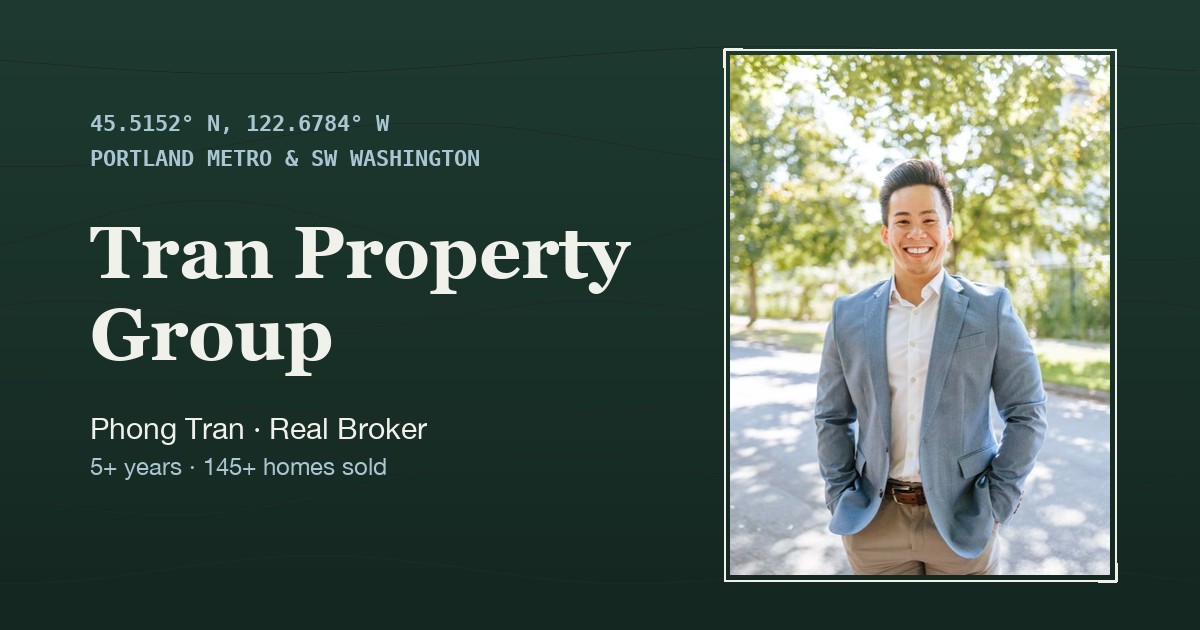
Thinking about making the move?
I help buyers relocate to Portland Metro and Southwest Washington every week. Let's talk through your specific situation.