Seven honest realities before you commit to Portland: home prices have risen well past the old cheap-Portland reputation (entry-level now $400K–$500K), winters bring long gray stretches rather than heavy rain, bridge bottlenecks make commute times unpredictable, the tech-heavy job market is competitive and niche (line up work before you move), nightlife is smaller-scale than a New York or LA, the culture takes real adjustment, and homelessness varies block by block rather than citywide.
If you're considering a move to Portland, here are seven things you need to be genuinely able to handle. If any of these are dealbreakers for you, it's worth knowing now rather than after you've moved.
1. Housing costs and affordability
The old "cheap Portland" reputation is out of date. Home prices appreciated as much as 18–20% during the pandemic years and have kept climbing since, in line with the rest of the West Coast. An entry-level home that ran $300K–$325K a decade ago is now more like $400K–$500K. Rents, groceries, utilities, and gas have all risen alongside it. Portland was actually ranked the number one destination for families relocating in recent data, which is adding to demand as the market comes out of this cycle. Budget with current numbers, not the numbers you might have heard a few years ago.
2. Long stretches of gray, not heavy rain
The common misconception is torrential rain. The reality is long stretches of overcast skies with light drizzle, running roughly from fall through late spring. It affects people physically (harder to get outside and stay active) and mentally — seasonal affective disorder is real here and hits newcomers from the South, Midwest, and East Coast particularly hard. My honest recommendation: visit during winter at least once before committing, not just during summer or fall when everything looks great. You can change your neighborhood or your home; you can't change the weather.
3. Traffic and the bridge bottlenecks
Portland isn't a fully walkable city despite the bike-friendly reputation — 90–95% of residents still rely on some form of vehicle. The city runs on an old grid system split by the Willamette River, connected by up to 12 bridges, plus the bridge connecting Vancouver, WA to Portland. Those bridges create real bottlenecks, and rush hour starts earlier and ends later than you'd expect — a 15-mile drive on the map can take 45 minutes to an hour depending on timing and route. Where you live relative to where you work matters more here than in most cities; I made the mistake myself early on of living in North Portland/Bethany while working in Wilsonville, and the commute took a real toll.
4. A competitive, niche job market
The west side — Hillsboro, Beaverton, North Plains, Tigard, Tualatin — is the Silicon Forest, anchored by Nike, Intel, and a cluster of semiconductor and tech companies. Demand for those roles is high and competitive, and the broader job market here is more niche than it looks from outside. My honest advice: don't move here planning to find a job after you arrive. Have something lined up, or have at least six months of financial reserves as a safety net. Cost of living here is high enough that this isn't a market where "I'll figure it out once I'm there" works reliably.
5. A smaller-scale entertainment and nightlife scene
Portland excels at food, local bars, coffee, craft beer, and outdoor access — but it doesn't have the fast-paced, large-scale nightlife of a New York or LA. What's here is real but smaller scale and can feel repetitive if that's not what you're looking for. If you want big-city nightlife as a primary draw, this isn't the right city. If food, coffee, and nature are what you're after, it delivers in a way few cities can match.
6. A distinct culture you need to adapt to, not fight
Portland is unapologetically itself — "keep Portland weird" isn't just a slogan, it's a real, consistent local identity with strong opinions and values. Moving here from a different kind of city or region is a real culture shift, and the people who thrive here are the ones who adapt to what Portland actually is rather than expecting it to become what they're used to.
7. Homelessness that varies block by block
Safety and visible homelessness vary enormously by neighborhood — sometimes by literal city block. One area can look rough, and two blocks over it's a completely different picture. This inconsistency is tied to how enforcement is handled locally and changes over time, which is exactly why it's worth working with someone who knows specific neighborhoods rather than judging a whole area from one drive-through or one online search.
Frequently asked questions
Should I move to Portland without a job lined up?
It's not recommended. The job market, especially the tech-heavy west-side corridor, is competitive and niche. The safer approach is to have a job lined up or at least six months of financial reserves before moving.
Does it rain a lot in Portland?
Less than people assume in terms of heavy rain — the reality is long stretches of overcast skies with light drizzle, mostly from fall through late spring, rather than frequent downpours.
Why do Portland commute times vary so much by neighborhood?
The metro runs on an old grid split by the Willamette River, connected by up to 12 bridges plus the Vancouver, WA crossing, which create serious bottlenecks. Rush hour often starts earlier and ends later than expected.
Is homelessness a problem everywhere in Portland?
No, it varies significantly by block and neighborhood rather than being citywide. Some areas close to downtown show more visible homelessness while neighborhoods just a couple blocks over can look completely different.
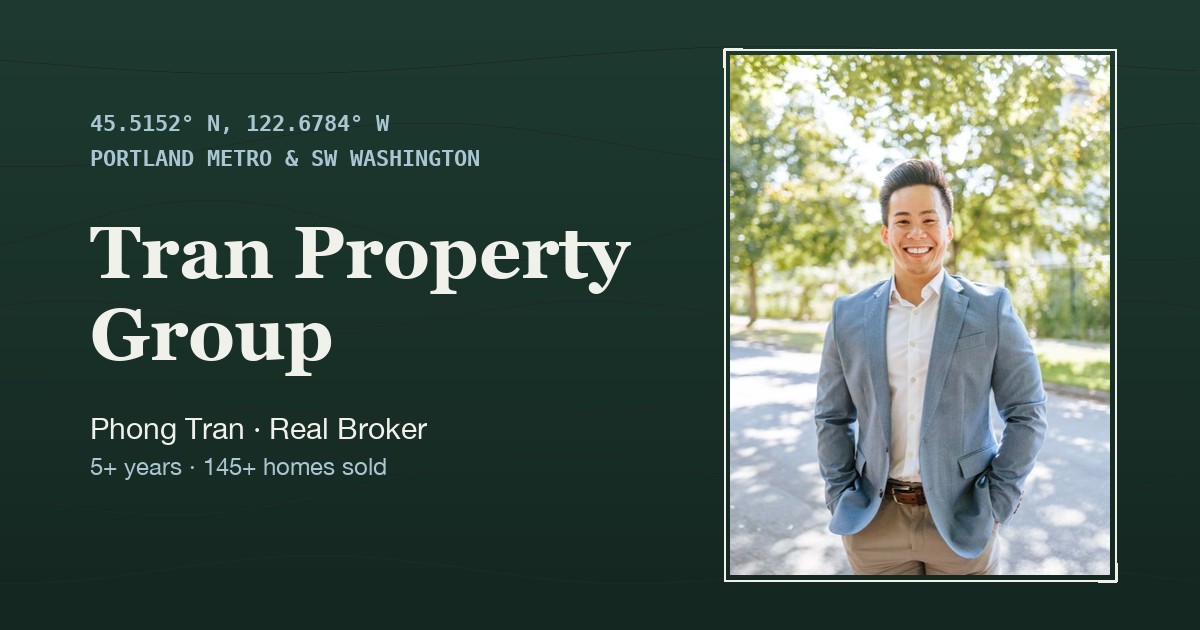
Thinking about making the move?
I help buyers relocate to Portland Metro and Southwest Washington every week. Let's talk through your specific situation.